miércoles, 10 de febrero de 2016

CARNIVAL IN ECUADOR

ORIGEN OF THE PARTY
As any one would expect, theCarnaval in Ecuador, is the Mardi-Gras of the country. It is a time for festivities and celebration, dance and music, food and color. But it is a celebration that has its roots in the history and tradition of Ecuador, and is therefore also a cultural celebration. In every city around Ecuador the celebrations begin early and carry on late into the night, with festival goers dancing through the streets, and the streets alive with joy and jubilation.
When going according to the Catholic calendar, Carnaval is celebrated prior to the Lent period. The original purpose of the Carnival was to be as a compensation for the Lent period, as believers prepare themselves to abstain for forty days during Lent and pay penitence, before the death of Christ is remembered. In Ecuador, it is known that the Huarangas Indians used to celebrate their own festival during which they would throw perfumed water, flour and flowers on each other during their event. And it is the amalgamation of these two traditions that formed Carnaval.
Looking at the festival as Lent compensation, visitors should be warned that almost anything goes during the Carnaval. Parades, floats, creative masks, dancing and music takes over the streets of Ecuador, and in most cities the Carnaval games give children and the young at heart the perfect opportunity to indulge in a little mischief, such as throwing water balloons, flour and eggs at each other and squirting unsuspecting passersby with foam. Of course the authorities have banned these dirty games from the Carnaval, but for most festival goers it is far too tempting to resists and these events take place no matter how hard the authorities try to curb the mess. It is a colorful and lively festival, and eating and drinking goes on well into the next morning.

Visitors with a good sense of humor and a taste for the energetic and lively side of traveling are recommended to decide on a city and participate in the Carnaval in Ecuador. It is guaranteed to be a unique and fun filled festival, where the streets become the dance floors and anybody is fair game for a water balloon.

FOOD

  • hornado
  • llapingacho
  • yaguarlocro
  • hen Pinllo
  • chicken broth
  • chigüiles
  • chicha
  • cuy

MUSIC


TRADITIONS AND ACTIVITIES

In almost all towns and cities of Ecuador play with water but with less intensity than in previous years because what is intended is culturizar this game and provide alternative entertainment is practiced, although many Ecuadorians advantage festive four days to attend paradisiacal beaches on the coast of Ecuador where the celebration in addition to water, foam and balloons also cultural celebrations in the area come together
various activities involving children, youth and adults, who have made this festival will constitute a cultural and tourist major event nationwide. art shows, parades with floats, parades and other activities have made the image of a carnival games with water, ink, flour and oil, go fading.

CARNIVAL IN PARAGUAY

It is one of the biggest tourist attractions in the city, and in turn is the largest carnival in the country. It lasts 4 weekends, there are eight nights of pure fun, party, glitter, lights, foam, feathers and beautiful bodies.
During the months leading clubs prepare their parades and allegories, they perform tests to offer a unique show every year.
Since 2014 it takes place at the Civic Center of the City (Sambadrome) and is located on the waterfront of Playa San Jose. It can accommodate about 12,000 people every night.
The Corsican Encarnacion attract thousands of tourists each year, which becomes one of the most important sources of income for the city and tourism.

Fotos de Carnaval EncarnacenoFotos de Carnaval Encarnaceno


jueves, 31 de diciembre de 2015

New Year

NEW YEAR IN ECUADOR

Origin
The celebration of New Year is performed in all cities of Ecuador, mainly with the tradition of burning the old year or puppet, a fact that represents leaving behind the negative experiences of the past year and welcoming a new one, with the hope it's better than the last.
Burning the old year has ancient history and occurs in many parts of the world, and it was in the Babylonian, Greek and Roman cultures.

Rome, worshiped with Prometheus custom of figures of men, birds and animals were burned to represent human vices.
This tradition passed to peoples under Rome, including Spain country for which we were conquered.
The first data on the existence of old age in our country are of 1895, when an epidemic of yellow fever struck the Guayaquil.
As health as they drew up bundles of straw and branches dresses dead relatives, to burn at the last day of the year and to drive away plague and desesperanz .. It is the representation of the old and the beginning of the new, to leave the past and plan the future.

This through dolls, known as old age or puppets made from sawdust.
Every year it cries, widows and heirs accompany the old until the last minute, when it concluded its notary read out the will to deliver all the accumulated heritage during the year, by which lets goods, qualities, flaws and penalties, thus revealing what happened in the will, which is nothing but a critical evaluation of what lived with humor. In different cities of Ecuador years old contests are held, many of which are traditional for over 40 años.Hace five years we see these puppets in large size at the Malecon 2000 with legends and wills of the facts leading nationally and internationally.


Food
In the case of food, it is not very specific, since people usually in this date usually go to restaurants where the food they eat is varied depending on the region they are and what they want served to dismiss the year.


Music

Traditions and activities
  • The main attraction is the burning of the famous old year represented by a doll made of sewn clothes and old, filled with sawdust or paper, or also made with other materials; this may be a celebrity in politics, sports, or someone close to the family (or friends 'enemies'), which the night of 31, was burned, a list of bad things also put it that will burn next to the puppet, you should jump on him, give him a couple of kicks.
  • The men are dressed in widows and roam the streets collecting money from the people walking the streets of the city.
  • Make kids play in the trade.
  • Parade of years old, they were displayed on a float through the streets of the city.
  • When assembled 24:00 the families are given the embrace of new year and burn the old year.

These are some of the superstitions that people practice at year-end, whether or not this outcome I think it's more a matter of faith and strength of conviction of the person who practices it, but the fact of making these traditions keep alive the coexistence and family union, customs that have benefited the historical heritage of the people, and we held together finding ways of harmony, solidarity, equality and fraternity.
  • Eat a grape for each of the 12 chimes that gives the clock. Ideally six green-six dwellings. Thus, the hopes and aspirations become reality.
  • Sit down and stop turning to each of the 12 chimes, for those who wish to get married.
  • Put money into shoes or socks (posts), brings economic prosperity.
  • Save a ticket in the portfolio, which should not be spending the whole year, does that ever becomes empty your wallet.
  • Putting underwear backwards, "garantizarás" the following year, new clothes you never miss.
  • Put a gold ring in champagne glass with the toast will be: will you ensure that money is not missing.
  • Lighting candles of colors: blue bring peace; yellow, abundance; red, passion; green, health; white, clarity, and oranges, intelligence.
  • Meeting with a suitcase just at midnight and give at least around the block, make sure you travel the following year.
  • Use yellow underwear "ensures" the happiness and happy moments.
  • Wash hands with champagne and sugar is to have money. At 24:00, they put their hands into a bowl of sugar. Then washed with champagne.

NEW YEAR IN GERMANY

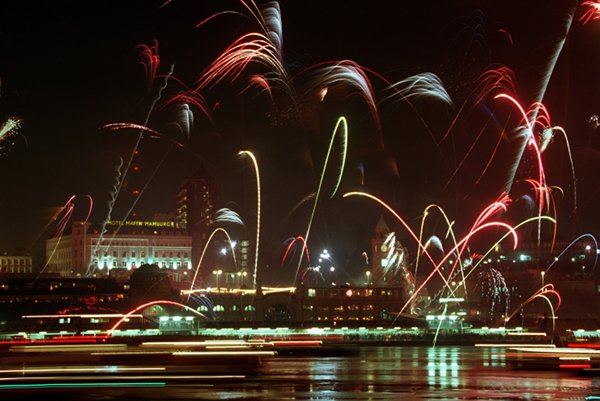
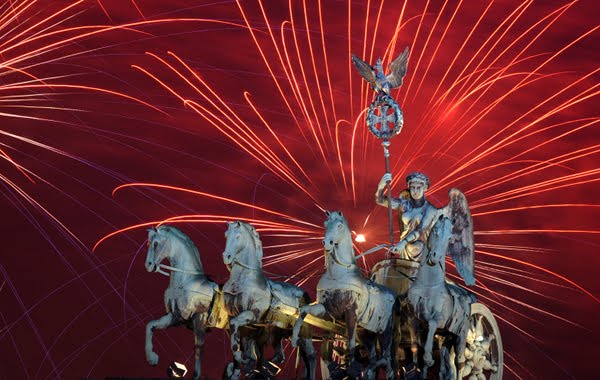
New Year's Eve for the Germans is not a family party. New Year's image in Germany prefer to celebrate in the streets, in bars or restaurants. In the villages in this holiday always parades and masquerades. The New Year always lit fireworks, which, according to ancient beliefs, ward off evil spirits. On this day, many Germans are singing, dancing and having fun.

German children are waiting today Saint Nicholas. good magician comes on a donkey and left on the window sill gifts and sweets for children.

German house wives are preparing a festive table. Traditional dishes in the New Year table - it's pork, sauerkraut with sausage, biscuits, cakes, cookies, etc. On the table on this day must necessarily be a source of the tent. According to legend, this fish bring good luck and prosperity in the new year.

In Germany, it is celebrated the New Year is very noisy and emotionally. When the clock strikes 12 starts, the Germans standing on a chair, with the last kick leap into the New Year. They cry, laugh and compliment.


martes, 29 de diciembre de 2015

Christmast

CHRISTMAST IN ECUADOR

Origin of the party
In Ecuador still traditions inherited from Spain as the Advent wreath are preserved, the ninth to the Child Jesus and the Masses of Christmas. However, there are frequent Nordic Christmas traditions like the Christmas tree or Christmas dinner with turkey, original of the United States.
In Ecuador, we have been influenced by both the Spanish and the American culture to celebrate Christmas. Ninth tradition is still preserved the Child Jesus, where adults and children go to church or gather in homes to sing Christmas carols and read some verses from the Bible.
Our country has managed custom brought by the Spanish conquistadors. The arrangement "nativity scenes" has been traditional in Catholic families, which dominated the figures the presence of cribs, because the figures of Joseph, Mary and baby Jesus are complemented with the interpretation of carols during the inns or calls novenas, prayers that are performed nine days before the feast of the Nativity.

Food


  • Baked turkey


  • Roast pork with pineapple


  • Green rice


  • Christmas rice


  • Russian salad


  • Plum sauce


  • pristine


Music


Traditions and Activities


  • Christmas tree: it is adorned with light bulbs, lights, figures and a star on the top of the tree.


  • Birth or cribs: The Birth done with moss, rocks, dirt, animals and figures are porcelain or which are more rustic wood and are beautiful.


  • The ninth: The December 16th begins the ninth, that is done with the family, but some churches have a habit of asking households borrowed. Then people go to pray in a house and there is sung, poems by the coming of the Christ child engaged. December 24 would correspond to the last of the ninth, they pray at home where they are to celebrate the dinner.


  • Good night's dinner: On 24 December at twelve o'clock when the whole family is together dining. At the dinner, the turkey, the stuffing, the other dishes (rice or salads) or vary in each city family is preferred.


  • Midnight Mass: On December 24, most families attend midnight mass, but in very few churches is done at midnight, Masses are usually between 21:00 and 22:00. During these Masses many families place the image of Jesus at the altar to ultimately be blessed by the priest.

  • Exchanging gifts or Secret Friend: A very peculiar aspect among Ecuadorians besides deliver gifts between family, playing secret friend in the workplace or education, in order to wish a Happy Easter and strengthen one year Moreover, the bonds of friendship.


CHRISTMAST IN GREECE

As majority Christian Orthodox country, Greece is a place where Christmas is celebrated in large and unabashedly. Their customs are part of ancient traditions that are relived every year in the heat of the celebrations for the birth of Jesus. Then we will know some of the interesting distinctive elements of the Christmas Greece.
 
On December 24, the day of Christmas Eve, all children wake up in the morning ready and excited to begin a special day.
 
House to house carrying their calandas, songs and poems alluding to the holidays, and are accompanied by the sound of trigonas, a triangle of steel tinkles using a wand of the same material. In homes, the fruit are known and typical desserts like kourabiedes, some cookies sweetened popular.
 
On December 25, before dawn, the most traditional families get up to go to church. During lunch they start to appear on the table the typical Christmas delicacies: galopoula (turkey stuffed with chestnuts, raisins, walnuts and almonds) with baked potatoes is one of the most watched options.
 
Unlike the known in many countries, the Greeks did not have Christmas trees. In return, they perform breathtaking shaped wooden models of sailing ships and there is traditional balls hanging all we usually see in the snowy pines. Another difference is that it has nothing to do with Santa Claus, and therefore no gifts are distributed.
 
It is only on 1 January arriving gifts, but the hand of San Basilio. The first day of the year, lunch is closed with a vassilopita, a special type of bread that is made from lemon zest and butter, which is creamy, with a delicious citrus flavor.