sábado, 28 de mayo de 2016

THE BATTLE OF PICHINCHA

The Battle of Pichincha
The Battle of May 24. THE BATTLE OF PICHINCHA May 24, 1822
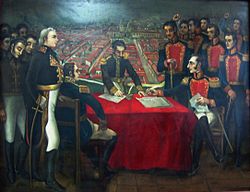
It was the battle of liberation from Spanish rule. A historic moment for the republic of Ecuador. History points to Marshal Antonio Jose de Sucre as the great manager of the Battle of Pichincha.

After the release of Guayaquil on October 9, 1820, the country enters a deep overhaul of its identity and after two failed attempts to free themselves from oppression, the great battle occurs on the slopes of Pichincha volcano, hence history remembers that episode as the Battle of Pichincha.
It was in 1822, where Sucre decides to face the Spanish troops with 1,700 men over the days became 3000 thanks to San Martin.

The big day was coming, it was the early morning of May 23 when troops silently run the Pichincha to plan what would be the battle of freedom and triumph.

After setbacks and hours of waiting, on May 24 the battle under a blazing sun occurs. Despite the casualties, the victorious soldiers were climbing the summit of the volcano. Once at the top they cried victory and thus one of the most memorable in the history of Ecuador days devoted.

May 24 is considered a civic date of the heroes who gave their lives for freedom. With the Battle of Pichincha, Ecuador political independence that marked the beginning of the Republican and independent life of Ecuador was sealed.

On May 25, Sucre entered with his army to Quito where he announced the surrender of the Spanish troops established in the territory that the government of Colombia called "Department of Quito", considering it as an integral part of the Republic of Colombia since its inception, the December 17, 1819.

This is not one of the most dazzling of local festivals, but it is one of national pride. On the 24th of May, both the military and many civilians do their utmost to put on a public display of national pride. The result is definitely worth seeing as parades, airplane shows and other activities all convey a strong sense of Ecuadorian nationalism. Of course, the best activities take place at Pichincha volcano so if you really want to get a good idea of festival activities then Pichincha is the one of best places to visit.


Independence Day in the United States
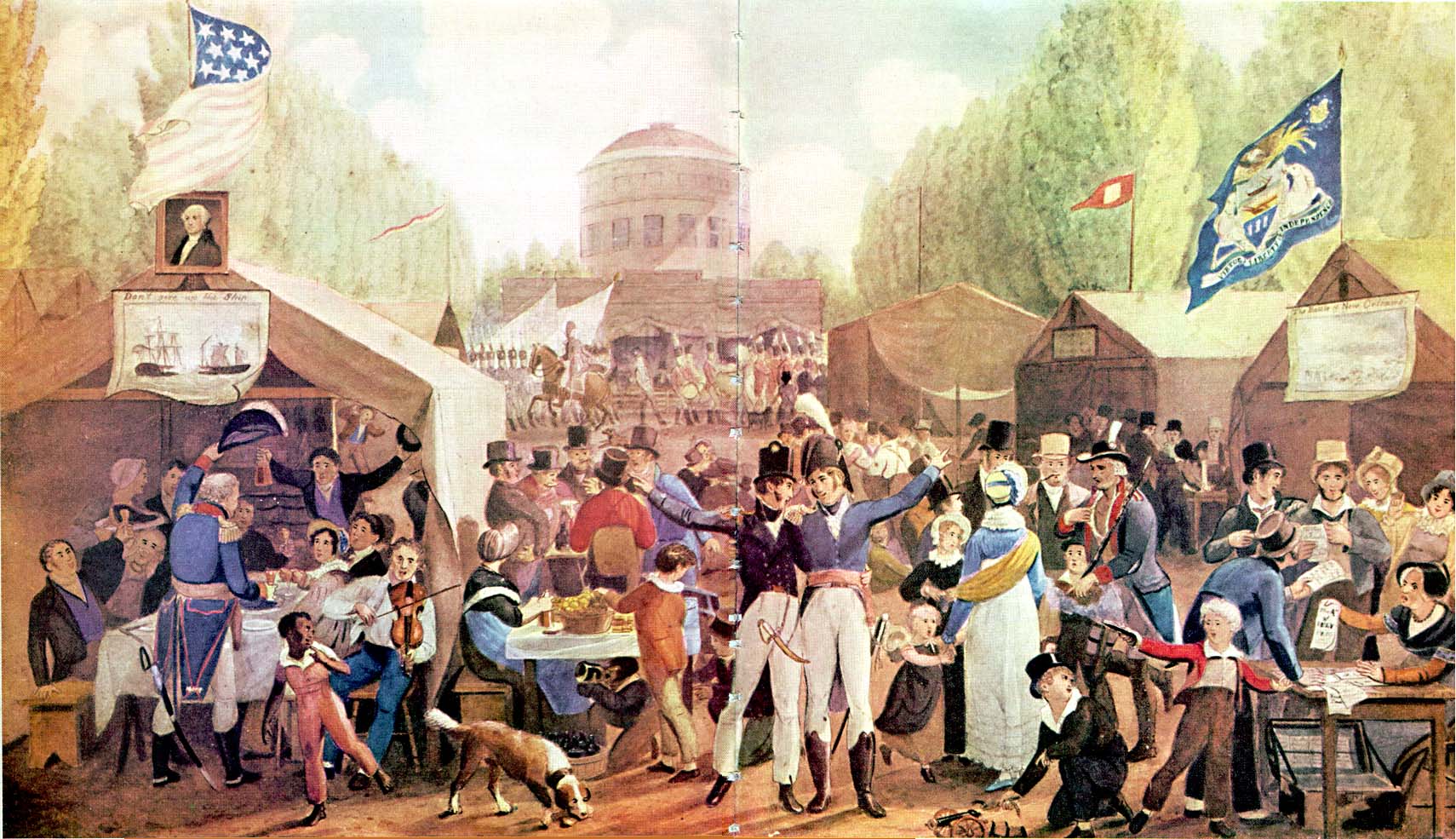
Independence Day is annually celebrated on July 4 and is often known as "the Fourth of July". It is the anniversary of the publication of the declaration of independence from Great Britain in 1776. Patriotic displays and family events are organized throughout the United States.

Celebrate Independence Day
Independence Day is a day of family celebrations with picnics and barbecues, showing a great deal of emphasis on the American tradition of political freedom. Activities associated with the day include watermelon or hotdog eating competitions and sporting events, such as baseball games, three-legged races, swimming activities and tug-of-war games.
Many people display the American flag outside their homes or buildings. Many communities arrange fireworks that are often accompanied by patriotic music. The most impressive fireworks are shown on television. Some employees use one or more of their vacation days to create a long weekend so that they can escape the heat at their favorite beach or vacation spot.
Independence Day is a patriotic holiday for celebrating the positive aspects of the United States. Many politicians appear at public events to show their support for the history, heritage and people of their country. Above all, people in the United States express and give thanks for the freedom and liberties fought by the first generation of many of today's Americans. The Statue of Liberty is a national monument that is associated with Independence Day.

Public Life
Independence Day is a federal holiday. If July 4 is a Saturday, it is observed on Friday, July 3. If July 4 is a Sunday, it is observed on Monday, July 5. Government offices and schools are closed. Some businesses may be closed as well. In some years, many employees use a proportion of their vacation days to create a long weekend. This can cause congestion in some places, particularly towards popular holiday destinations.
There are many public events, parades, shows and fireworks displays. This may cause local disruption to traffic. Public transit systems do not usually operate on their regular timetables.

About Independence Day
In 1775, people in New England began fighting the British for their independence. On July 2, 1776, the Congress secretly voted for independence from Great Britain. Two days later, on July 4, 1776, the final wording of the Declaration of Independence was approved, and the document was published. The first public reading of the Declaration of Independence was on July 8, 1776. Delegates began to sign the Declaration of Independence on August 2, 1776. In 1870, Independence Day was made an unpaid holiday for federal employees. In 1941, it became a paid holiday for them.
The first description of how Independence Day would be celebrated was in a letter from John Adams to his wife Abigail on July 3, 1776. He described "pomp and parade, with shows, games, sports, guns, bells, bonfires, and illuminations" throughout the United States. However, the term "Independence Day" was not used until 1791.
Interestingly, Thomas Jefferson and John Adams, both signers of the Declaration of Independence and presidents of the United States, died on July 4, 1826 - exactly 50 years after the adoption of the declaration. It is also important to note that Native Americans lived in the country and each tribe had its own nation and government prior to the European settlers.


viernes, 27 de mayo de 2016

Open House of Amazonas High School

INTRODUCTION

Open houses Amazonas high school began with the subject of English, on May, Monday 21, 2016, in the classroom of the second "I". The issue that took place was on "Biodiversity of Ecuador" in which several students from different courses got to meet other college students attending observe on the subject, through exhibitions, images, videos and presentation typical dances of certain provinces highlighting our customs.


BODY

I like when students presented traditional dances that were announced each dance represents the culture that each region of the country the clothes they wear with their bright colors and shapes of the costumes, the kind of music that is typical of those peoples and how they move with the same music, the attention of viewers and above all do admire the great biodiversity Ecuador has.


I do not like when some of the boys talked about it, because because they were nervous they could not pronounce well what they had to say, and that made it done a little confused and could not understand clearly the concept of idea what they were talking about or what they wanted to talk, but anyway, others did well and got to know his idea being easier to understand what they were talking about.


CONCLUSION

Open House English was very well organized by people who coordinated this issue because they allowed many students interested in observing this event will explore many of the things we do not know our own country, the biodiversity that exists in him and not we appreciate, thanks also to those students who participated in this exhibition and showed discipline being clear with the ideas that were to reveal to those who were listening attentively.


sábado, 7 de mayo de 2016

Mother's Day

ORIGIN
The first celebrations of Mother's Day dates back to ancient Greece, where he surrendered honor Rhea, the mother of Zeus, Poseidon and Hades gods.

Also the Romans called this celebration the Hilaria when acquired from the Greeks. It was held on March 15 at the temple of Cybele for three days and offerings were made.

Catholics transformed these celebrations to honor the Virgin Mary, mother of Jesus. In the Catholic calendar on December 8, the Feast of the Immaculate Conception, a date that Catholics adopted for the celebration of Mother's Day is celebrated.

In England in the seventeenth century, a similar event took place, also related to the Virgin, which Domingo called Mothering. The children attended mass and returned home with gifts for their mothers. In addition, as many people working for wealthy people and had the opportunity to stay in their homes, that Sunday was given the day off to visit their families.4 5

In 1870 the poet and activist Julia Ward Howe wrote the Proclamation of Mother's Day, a passionate call for peace and disarmament. For a couple of years, Ward Howe insisted his efforts in conducting a conference of this nature.

Anyway, in 1873, women in 18 US cities held a meeting on Mother's Day. Boston continued to hold him for at least another decade. Over the years, they were putting out more celebrations. Howe continued to work in other ways for the rights of women and the paz.6 On May 12, 1907 Ana Jervis two years after the death of his mother, wanted to commemorate the death and organized a Mother's Day to do so. Thereafter he led an active campaign was spreading throughout the territory of the US.7 September 8

Finally, seven years later, President Woodrow Wilson declared in 1914, the Mother's Day as the second Sunday in May in the United States. That was gestated the International Day of the mother after finding was echoed in other countries that adopted it to be the celebration known today.

FOOD


MUSIC

TRADITIONS AND ACTIVITIES
There are different ways to celebrate mom, the most traditional are sending flowers, make gifts, write poems, phrases or make cards for Mother's Day. Unfortunately this good habits have been lost some time and has tried to turn this celebration into a simple date for trade and profit.


MOTHER'S DAY IN RUSSIA
Mother's Day, celebrated in Russia on the last Sunday of November, he can not leave anyone indifferent. It was established in 1998.

On the eve of Mother's Day in the Russian capital activity "! Mom, I love you!" Was organized. Its symbol was a forget-me, the flower which according to legend has a miraculous power of memory back to people who have forgotten their relatives and close. Near the more people filled stations of the Moscow metro cards can give to mom personally or email them were distributed free. In these cards a moving bear with a flower in his paw and inscription appears "! Mom, I love you!"

An original sports festival in honor of Mother's Day was held in St. Petersburg in which 140 families participated with their young children up to one year. For a whole month and potatoes came moms intensely training with their little ones to learn to arrastarse knees against the clock. Only one parent was allowed to crawl beside his young desportista, he told the Voice of Russia the organizer of this unprecedented competition Natalia Rusakova.

Children are trained in their own homes. A baby, for example, was very fond of the phone sounded music and crawled behind the appliance. Of course, her parents were presented in this competition with a phone, others with computers, others brought a toy motntón. The funniest thing was when the kids crawled by our eight tracks simultaneously. Everyone put to laugh when a boy, seeing a razor in neighboring runway, veered toward her. This baby is not due disenrolled from these "races" because his mother, using their own methods and toys with rattles, could return to his chabal to its own track.

All "crawling baby walkers" had to cross a distance of 10 meters in two minutes. The winners of this "race" were classified in each age between boys and girls separately. The "races" passed in a fun atmosphere, all young riders received useful gifts as comfortable sleds and musical toys, while the fastest, really a sports drink, the first in their lives. By tradition, like dedicated to Mother's Day activities were held in all Russian regions. And everywhere expressions of thanks to women could be heard for their dedicated educational work, worrying tenderness and infinite love with the kids.

El Día de la Madre


domingo, 17 de abril de 2016

Teacher's Day

ORIGIN
In 1920 President Alfredo Baquerizo decreed on April 13 as the Day of Ecuadorian Master in tribute to the writer and educator Juan Montalvo, who was born on April 13, 1832.
On this memorable day tribute of respect and gratitude to all those who exercise the ministry of education surrenders. Juan Montalvo was an outstanding thinker and great defender of democracy.
On April 13 of each year is the occasion in which society expresses its sincere appreciation to everyday till the present and the future of the country in children, young people and their children.

Andthe life work of Juan Montalvo were and remain magisterial teachings for their moral and aesthetic value. As forger of youth, Juan Montalvo knew the inescapable need to instill in young people the values of justice, freedom, honor, love of country.
Juan Montalvo was the master of style, the great battler against tyrannies, the apostle of freedom, the saint of rebellion.


Juan Montalvo
He was born in Ambato - Ecuador, on April 13, 1832. He made his birthplace in primary school, and continued in Quito high school and college, although he did not complete his law studies. In 1853, he started in Ambato his journalistic and literary work. For jobs in the Legation of Ecuador, he toured Switzerland, Italy, France. With the government of Gabriel Garcia Moreno, Montalvo took refuge in Colombia, then went to Paris and Panama.

In 1875 he returned home and the following year began publishing "Regenerator" but again had to leave Ecuador. He settled in Paris, where he made several publications, but because of a lung problem, died on January 17, 1889. Among other works, there may be mentioned:
• The Cosmopolitan
• The Seven Treaties
• Chapters that he forgot Cervantes

MUSIC


Teachers' Day in Venezuela
On January 15, 1932, during the dictatorship of Juan Vicente Gómez educators they formed the Venezuelan Society of Teachers of Public Instruction to defend labor rights of teachers and improve education in the country. Led by Miguel Suniaga and Luis Beltrán Prieto Figueroa, they founded the Venezuelan Society of Teachers of Public Instruction.

Years later, in 1945 that date was proclaimed to honor the Venezuelan educators and remember the creation of the Venezuelan Society of Teachers of Public Instruction.

Between 1949 and 1958, during the dictatorship of General Marcos Perez Jimenez, the magisterial movement was diminished, since many of the teachers who had actively participated in it had to leave the country, because they were linked to replaced democratic government.

During the term of Perez Jimenez in 1952, the celebration of Teacher's Day was changed to November 29, the birthday of Andres Bello, to erase the memory of the heroic deeds of teachers against the dictatorship.

From 1959, after the fall of the Perez Jimenez dictatorship, he was retaken the date that was initially fixed by Medina Angarita and which currently pays homage to the Venezuelan teachers.


domingo, 3 de abril de 2016

Easter

ORIGIN
“Holy Week” is a predominantly Catholic and Christian festivity, introduced to Ecuador by the Spanish conquerors under the strong influence of the Catholic clerics. Holy Week is a moveable feast, varying from year to year but always six weeks after Carnival and celebrates the Biblical episode in which Jesus fasted for 40 days in the desert, while frequently being tempted by the Devil. Beginning with Palm Sunday, which recalls the entrance of Jesus to Jerusalem decked with palms and olive leaves while masses of followers hailed and praised his Glory, Holy Week ends the following Sunday, Easter Sunday, which commemorates the resurrection of Jesus after his crucifixion and death. This celebration is a pageant of symbols and rituals related to the biblical stories about that decisive week in the life of Jesus, when, after his triumphant arrival in Jerusalem and hailed as the Son of God, he was persecuted by the Romans, betrayed by one of his own disciples, and then judged and condemned to death on the Cross. Within a few days, Jesus had been converted from the human embodiment of God to a villain condemned to a gruesome death. During that same week, Jesus initiated the Holy Eucharist during his last supper with his apostles. After his martyrdom and death on Passion Friday and a somber silence during Saturday, on Sunday a number of Jesus’ disciples visited the tomb where he had been buried, only to find that the heavy stone sealing the entrance had been removed and the tomb empty. Shortly afterwards, while puzzling over what could have happened, Jesus appeared to Mary Magdalena and asked her to tell the disciples that, fulfilling the biblical prophecies, he had been resurrected and was about to join His Father in Heaven. This is Easter Sunday.

Holy Week is celebrated between February and March, with its exact date determined by the phases of moon. Holy Friday (also known as Good Friday or Passion Friday), must always coincide with a period of full moon. The Carnival fiestas are held 40 days earlier.

Holy Week is celebrated in a variety of ways throughout predominantly Catholic Ecuador. Most events take place in religious temples but large outpourings of popular faith are manifested in events such as the processions, described below. The best venues to witness these events are the cities of Quito, Guayaquil and Cuenca, though various popular theatrical representations are held in several smaller cities and towns in the country’s regions, recalling the biblical episodes of that special week.

FOOD
  • Fanesca: Fanesca is an Ecuadorian soup is eaten during Easter, is prepared with cod, pumpkin, squash, beans, doddering, corn, peas, beans or beans, rice, onion, garlic, cumin, achiote, peanuts, milk, cream and cheese. Fanesca is accompanied with sliced ​​boiled egg, fried plantains, tanning pearl onions, cheese and pies wind.


  • Wind Empanadas: pasties stuffed with cottage cheese Ecuadorian and onion, then fried and sprinkled with sugar.


  • Molo potatoes: potatoes Molo is an Ecuadorian recipe for mashed potatoes are prepared with a rehash of onions, garlic and annatto. Molo served with lettuce, boiled eggs, cheese, avocado, green onions, cilantro or parsley, and pepper.


  • Onion and tomato tanning: Tanned sauce tomato onion with lemon juice, salt and cilantro. It is ideal to accompany the molo potatoes.


  • Fried plantains: Recipe fried plantains with cheese.


  • Humitas: Ecuadorian tamales are prepared tamales or cupcakes with tender corn, onion, garlic, eggs, cheese and cream, cooked wrapped in corn leaves steamed.


  • Rice pudding: Rice pudding is a traditional Easter dessert prepared with rice, milk, cinnamon, sugar, raisins and condensed milk.


  • Sweet figs: fresh figs or dried figs are cooked in spiced honey brown sugar figs are served accompanied with slices of cheese.


TRADITIONS AND ACTIVITIES
Holy Week starts with Palm Sunday. On this day, nearly every Ecuadorian city and village holds open air masses in parks and squares to which the faithful attend carrying delicately arranged palms in an assortment of shapes and sizes. The priests emphasize the spiritual values of this week and the importance of remembering the teachings of Jesus Christ. 

In Quito, on Holy Wednesday, the city’s magnificent Metropolitan Cathedral is the venue for a ceremony harking back to ancient times, possibly based on the practices of the earlier Christians. The most senior clerics, dressed in black and adorned in long capes, kneel in front of the Archbishop who moves a giant black flag over their heads. This ritual is a reminder of the imminence of death, while the triumphant flag alludes to the promise of Resurrection. Deeply symbolic, this ritual attracts locals and visitors alike, who observe in awe this ceremony which is now only celebrated in Quito and Seville (Spain) in the entire Christian world. 

Throughout the entire week, Quito and a few other cities host religious and classical music concerts performed in and around the splendid colonial temples and their surroundings or inner squares, as well as in other public areas. Several convents and monasteries open their doors to the public and exhibit of some of the treasures of religious art which they preserve inside while various museums extend their opening hours. The religious celebrations also form an important element of the local culture. 

On Maundy Thursday, the Catholic temples commemorate the Last Supper, in remembrance of the last meal shared by Jesus with his disciples in which he broke bread with each of them, telling them to “take and eat of it, for this is my body”, thus instituting Holy Communion. On this day, the Pope at Saint Peter’s Cathedral as well as bishops in every city cleanse the feet of the very poor and indigent in a gesture of humbleness, another reminder of the preachings of Jesus. 

On Holy Friday, when the passion and death of Jesus are recalled, massive processions fill the streets of Quito and Guayaquil, converting the events into immense expressions of popular faith and religiousness. In Quito, the Procession of the statue “Jesus the Great Power”, a much venerated sculpture, is borne from the imposing and historic church and square of San Francisco by the chanting faithful through the city’s colonial center accompanied by acts of faith, prior to returning to San Francisco again. 

A highlight of this procession are the “cucuruchos”, whose origins lie in the ancestral rites of southern Spain. Mostly men and of all ages, their purple gowns cover their faces and culminate in foot-high pointed “bonnets”. Only their eyes can be seen. Many walk barefoot, their feet shackled with burdensome chains, while bearing heavy wooden crosses, crowns of thorns and lashing their naked torsos with “ortiga” (stinging nettles). Forming part of the procession are also the “Veronicas”. Dressed as in biblical times, these women represent their predecessors who, according to the biblical description, passed a blood and sweat soaked cloth over Jesus’ face as he made his way to Mount Calvary where he would be crucified. 

The procession consists of thousands of the faithful, of all ages and social backgrounds, and is closely followed by admiring local and foreign visitors anxious to catch a glimpse of this unique expression of faith and its very special symbols, accompanied by a backdrop of enthusiastic religious chanting, intoned with great devotion. 

After a Saturday of meditation and silence, Easter Sunday sees massive open air masses celebrated with passionate demonstrations of joy for the resurrection of Jesus Christ. In Quito, Holy Week is traditionally closed on Easter Sunday afternoon, at sunset, with the magnificent and beautifully synchronized “Concert of Bells”. The city’s air resonates to the sound of the giant brass bells of over 50 churches, convents and monasteries in Quito’s Colonial Center, pealing in an authentic concert of joyful sounds, frequently followed by a firework display against the background of the churches, buildings and historic monuments with their spectacularly illuminated facades, towers, balconies and domes.


EASTER IN CHILE
Valparaiso has a wide diversity of traditions at Easter. On Friday the Via Crucis Church The Matrix will be held at 19.00 hours, and the Via Crucis of Cerro Placeres, at 20.30. Both rituals are part of the intangible heritage that has the city. On Sunday, at 19.00 hours, the work Jesus Christ Super Star in the Parque Italia will be displayed, and Saturday, at 21.00, Burning Judas (burning of sins) will be held. In Burning of Judas, the locals themselves put together a doll about four meters representing Judas. Then all they write their sins on paper and deposit them in the body of the doll. To the tune of a carnival and dance alluding to the sins committed by citizens, slowly burning the doll. This public festival represents an old European tradition brought by settlers to the city, which is held every Saturday of Easter. "In addition, all museums will be open to the public during normal hours," adds Mariángel Ruedi, Tourism Development Department of the Municipality of Valparaiso. Last year more than 5,000 people attended. It is expected that this year locals and tourists come to tradition.

miércoles, 10 de febrero de 2016

CARNIVAL IN ECUADOR

ORIGEN OF THE PARTY
As any one would expect, theCarnaval in Ecuador, is the Mardi-Gras of the country. It is a time for festivities and celebration, dance and music, food and color. But it is a celebration that has its roots in the history and tradition of Ecuador, and is therefore also a cultural celebration. In every city around Ecuador the celebrations begin early and carry on late into the night, with festival goers dancing through the streets, and the streets alive with joy and jubilation.
When going according to the Catholic calendar, Carnaval is celebrated prior to the Lent period. The original purpose of the Carnival was to be as a compensation for the Lent period, as believers prepare themselves to abstain for forty days during Lent and pay penitence, before the death of Christ is remembered. In Ecuador, it is known that the Huarangas Indians used to celebrate their own festival during which they would throw perfumed water, flour and flowers on each other during their event. And it is the amalgamation of these two traditions that formed Carnaval.
Looking at the festival as Lent compensation, visitors should be warned that almost anything goes during the Carnaval. Parades, floats, creative masks, dancing and music takes over the streets of Ecuador, and in most cities the Carnaval games give children and the young at heart the perfect opportunity to indulge in a little mischief, such as throwing water balloons, flour and eggs at each other and squirting unsuspecting passersby with foam. Of course the authorities have banned these dirty games from the Carnaval, but for most festival goers it is far too tempting to resists and these events take place no matter how hard the authorities try to curb the mess. It is a colorful and lively festival, and eating and drinking goes on well into the next morning.

Visitors with a good sense of humor and a taste for the energetic and lively side of traveling are recommended to decide on a city and participate in the Carnaval in Ecuador. It is guaranteed to be a unique and fun filled festival, where the streets become the dance floors and anybody is fair game for a water balloon.

FOOD

  • hornado
  • llapingacho
  • yaguarlocro
  • hen Pinllo
  • chicken broth
  • chigüiles
  • chicha
  • cuy

MUSIC


TRADITIONS AND ACTIVITIES

In almost all towns and cities of Ecuador play with water but with less intensity than in previous years because what is intended is culturizar this game and provide alternative entertainment is practiced, although many Ecuadorians advantage festive four days to attend paradisiacal beaches on the coast of Ecuador where the celebration in addition to water, foam and balloons also cultural celebrations in the area come together
various activities involving children, youth and adults, who have made this festival will constitute a cultural and tourist major event nationwide. art shows, parades with floats, parades and other activities have made the image of a carnival games with water, ink, flour and oil, go fading.

CARNIVAL IN PARAGUAY

It is one of the biggest tourist attractions in the city, and in turn is the largest carnival in the country. It lasts 4 weekends, there are eight nights of pure fun, party, glitter, lights, foam, feathers and beautiful bodies.
During the months leading clubs prepare their parades and allegories, they perform tests to offer a unique show every year.
Since 2014 it takes place at the Civic Center of the City (Sambadrome) and is located on the waterfront of Playa San Jose. It can accommodate about 12,000 people every night.
The Corsican Encarnacion attract thousands of tourists each year, which becomes one of the most important sources of income for the city and tourism.

Fotos de Carnaval EncarnacenoFotos de Carnaval Encarnaceno